Gaelic language, identity and sense of place in the Outer Hebrides

By Isabel Hernandez Moreno
Over the summer, I am working with the Shared Island Stories project as part of my work placement to complete my MLitt in Museum and Heritage at St Andrews. I was instantly drawn to the project due to its connections to sustainability, intangible heritage, and the transnational relations between the Scottish Isles and the Caribbean. It is no surprise then that I was thrilled when I found out that my task would be to create a documentary depicting the Intangible Cultural Heritage (ICH) found in the Outer Hebrides.
After months of research and a windy ferry ride, I finally found myself in the Hebrides. Two things caught my attention: How beautiful the landscape was and the fact that all the signs are written in Gaelic first and English second. While I understood the importance of Gaelic on a surface level, I wasn’t aware just how much it meant to people until I spoke to the locals.

I first observed this right after my first set of interviews at the Galson Estate, where I followed the two representatives and my colleague up to the peat bank. While Emily filmed the peat bank, I stayed back and chatted with the representatives. It was a bit of mindless talk, but one of them mentioned that it was hard to describe peat banks in English, but that there were Gaelic names for all the different components. The younger one shared with me that even though she was brought up with Gaelic, she didn’t speak it much, but she knew her way around it. That short interaction reminded me of Màiri Robertson, who talked about the fact that language and landscape are intimately linked in the Outer Hebrides, and that can be seen in the language used around crofting, fishing, and daily life.

Later that evening, I met with a young woman born on the Island of Lewis who had lived abroad for quite some time. After speaking to her, I felt this sense of place that runs deep in the people here and the importance that Gaelic has in their conception of home. She felt guilty for not speaking Gaelic like a native, constantly telling me that it should be better, especially as it used to be the main language she used with her grandma. Even though there has been a linguistic shift in the last few decades, it is still widely understood that language is more than communication; it is also, in the words of Magnus Course and Gillebride MacMillan, a repository of knowledge and shared values. For the islanders, not knowing Gaelic means not being able to fully access their heritage, as I’ve been told by most people I’ve spoken to.
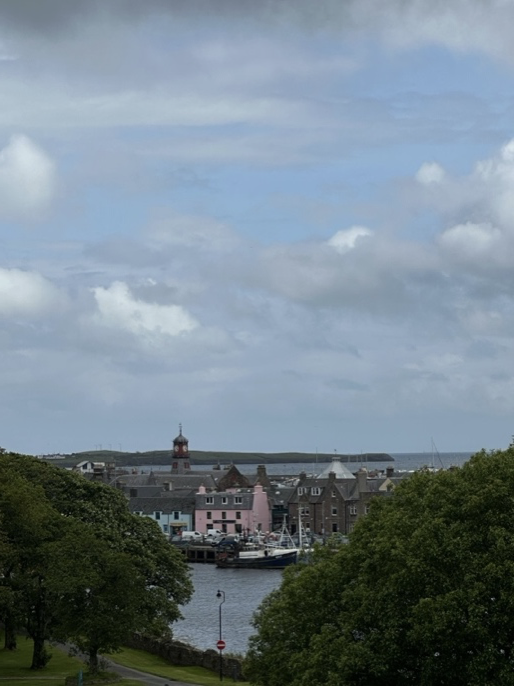
That Saturday, I met with a singer and musician who is very loved by the community, as several people urged me to talk to her. She shared her love for music and her efforts to teach Gaelic, as well as to pass down her community’s stories. She lamented how the islands felt different and how people who moved there often disregarded the culture, which she so desperately tried to share. Her sentiment reminded me of the ‘white settlers’ phenomenon described by James Oliver, where he states that people looking for a lifestyle change idealise rural living, moving then to places they don’t know or care to learn much about. Tied to this is local emigration, particularly from young people who leave for the mainland searching for higher education or jobs, effectively changing the demographics of the place and making it harder to preserve and pass down heritage practices.
This is an aspect I can particularly relate to. Back home in Mexico, the issue of gentrification has risen after the COVID pandemic. When I visited my sister in Mérida, one of the top tourist destinations in Mexico, everywhere I looked had signs denouncing this process with phrases such as “Americans, leave”, “Gentrification is neocolonialism”, and “Gringos go home”. The problem isn’t that Americans are moving to Mexico, but rather that they are avoiding taxes, expecting everyone to speak English, and raising housing prices. In the words of journalist James Stanley, they “don’t feel obligated to learn any Spanish, engage with the existing community, or learn any of the cultural norms”.

After sympathising with her, I asked her if one could truly know the Isles without speaking Gaelic; she affirmed that it would be very hard to do so. Even though there have been institutional efforts to teach Gaelic and crofting traditions, this can’t work without the involvement and openness of the community. All these interactions showed me the importance of the Gaelic language. It opens the doors to a larger heritage and allows locals to understand their identity in relation to their sense of place within the Outer Hebrides and in the diaspora. Young people in the mainland find joining Gaelic groups comforting, native speakers enjoy teaching it, and people who come back understand its significance within their community and homes.
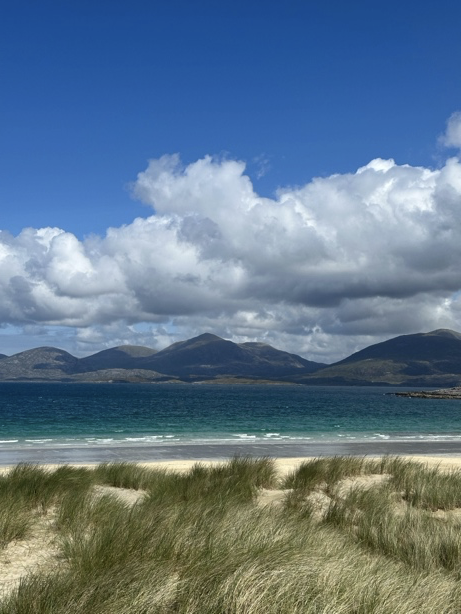
As I’ve fallen in love with the Outer Hebrides, I’ve realised that it is truly the people and their culture that make them what they are. They have shared with me a fear of losing their language, a struggle for the land and survival, a deep love for music, stories, and traditions, and a strong desire to remain and pass down their heritage.
Bibliography
– Course, Magnus and Gillebride MacMillan. “Fishing, Gaelic and environment in the Outer Hebrides.” In McLeod, W., Gunderloch A. and Dunbar R. (eds.) C`anan & Cultar / Language & Culture. Rannsachadh na Gàidhlig 10. Aberdeen University Press: Aberdeen.
– Oliver, James. “Articulating ‘ home ‘ from ‘away’: Cultural identities, belonging and citizenship.” Anthropology in Action 18, no. 2 (2011): 9-18.
– Robertson, Màiri. “Àite Dachaidh: Re‐connecting people with place—Island landscapes and intangible heritage.” International Journal of Heritage Studies 15, no. 2-3 (2009): 153-162.
– Stanley, James. “Inside the Violent Gentrification of Mexico City”. Medium. Accessed on June 14th, 2025. https://medium.com/@jamesdstanley91/inside-the-violent-gentrification-of-mexico-city-fueled-by-tourism-bf1215b0b4e3
Reflective reports by University of St Andrews MLitt in Museum and Heritage Studies students conducting their summer placements with the Shared Island Stories research project coordinated by ACHS member Professor Karen Brown. Exploring the Outer Hebridean Islands of Scotland, Isabel and Emily have been researching and recording histories and heritage of peatlands and surrounding Intangible Cultural and Natural Heritage.