Researcher Blogs
Rebuilding Carriacou Museum and Historical Society
Blog Post by Professor Karen Brown, Shared Island Stories Project Lead, April 2026
In late June 2024, a tropical wave left the coast of West Africa, intensified over the central tropical Atlantic, morphed into a tropical depression and subsequently became Category 5 Hurricane Beryl. This rare tropical cyclone ripped through the Grenadian islands in the southern Caribbean, damaging over 90% of homes, uprooting trees, overturning boats, causing power and telecommunications outages, and tragically resulting in several fatalities. Many communities were upended, and local community museums were not untouched either – for example, drone footage shows the roof ripped off and the contents strewn asunder at Carriacou Museum, with members of the Executive Board recounting tales of emergency, salvage, and essential collections care.
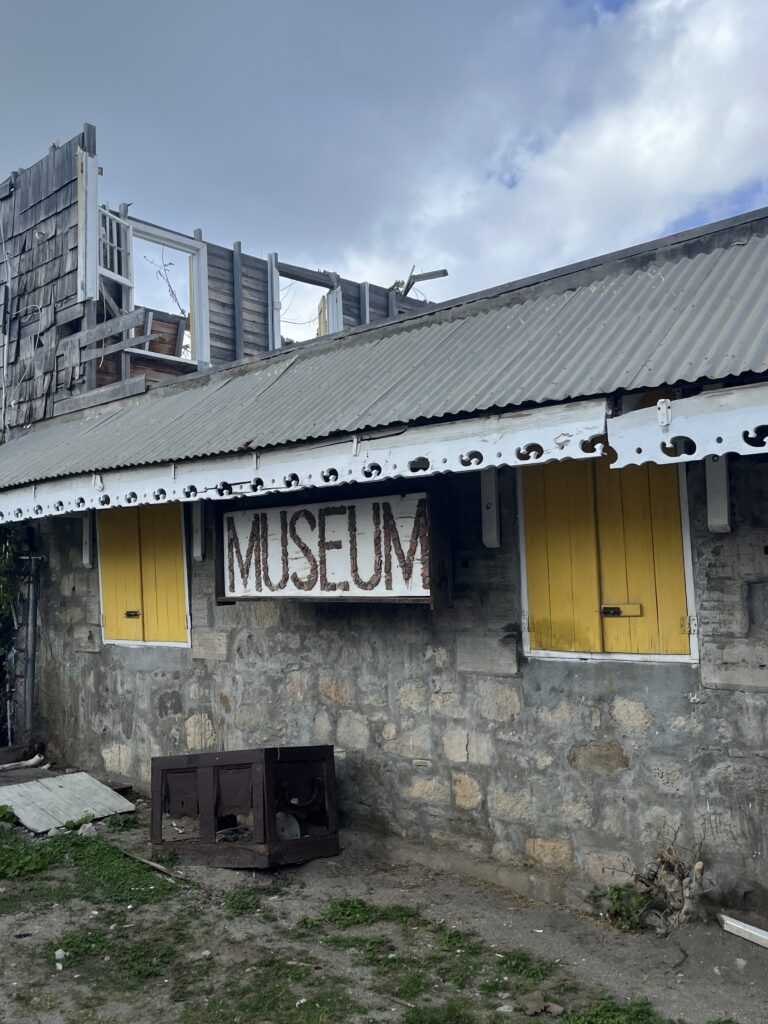
Left: Carriacou Museum, with the upper floor ruined by Hurricane Beryl. March 2026. Photo © Karen Brown, University of St Andrews
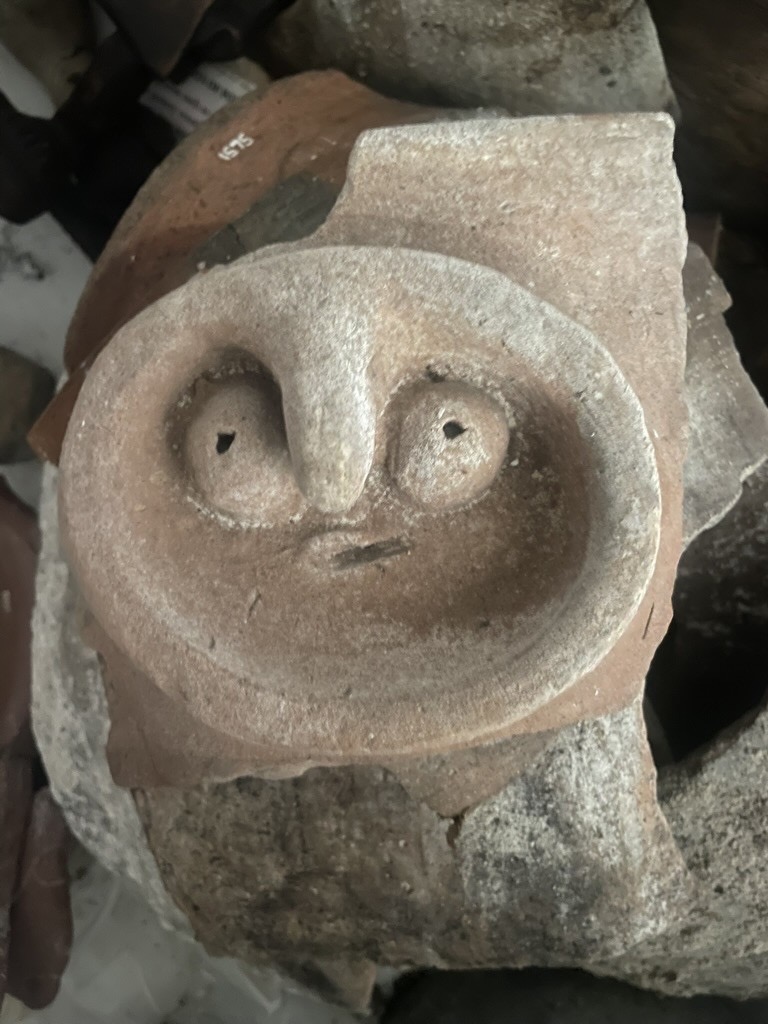
Right: Pre-Colombian artefact needing cleaning and preventive preservation during the rebuild. With thanks to colleagues at Barbados Museum and Historical Society for their initial triage emergency advice. Photos © Karen Brown, University of St Andrews
Through 2026, however, a strong new vision for this museum is emerging; one that “builds back better” for a more sustainable and climate-ready future; one that needs a multi-disciplinary team capable of addressing complex societal challenges:
“Imagine our museum hosting interactive exhibits about coral reefs, mangrove forests, turtle nesting habits, or the science behind sargassum blooms. Imagine students walking through the door and seeing artefacts of the past and possibilities for their future. […] We have the chance to create something rooted in our identity as islanders but forward-looking in its vision. We can honour our heritage while nurturing a new wave of ocean stewards.” (quote from Carriacou Museum and Historical Society website).
As the Shared Island Stories between Scotland and the Caribbean: Past, Present, Future project enters its final furlong, the challenge is moving inexorably to include support and advocacy for community museums and heritage affected by the worst effects of climate change.
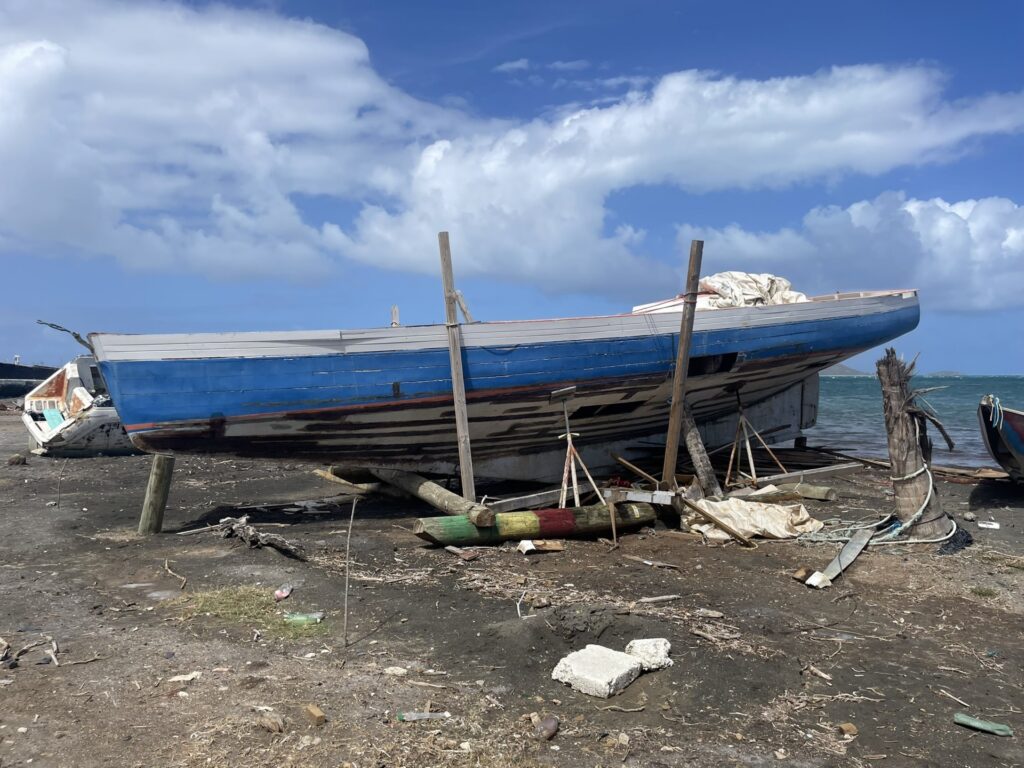
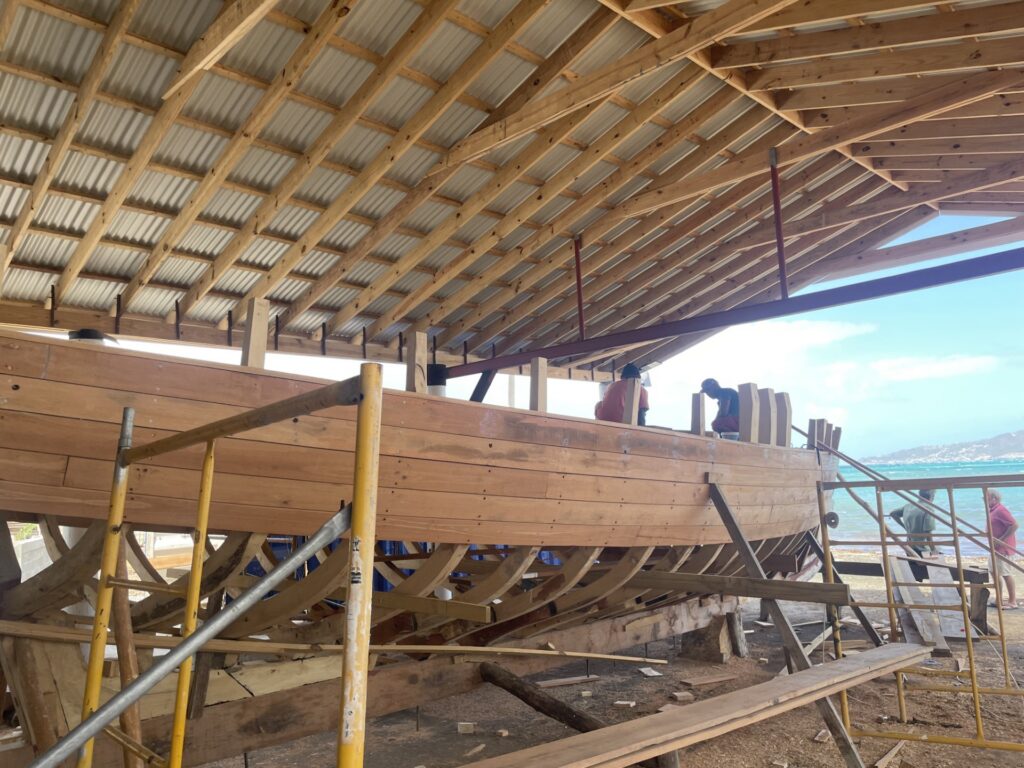
Carriacou and Petit Martinique already have important Intangible Cultural Heritage assets inscribed by UNESCO in 2023 concerning the rich heritage of wooden boat building by sight and surrounding cultural traditions; practices that can only be taught through intergenerational transfer of knowledge and “learning by doing”. This year, their ambitions have grown to encompass fundraising for a community maritime museum and a formalised shipwright training programme, with a lovely and robust boatbuilding shed already erected at Windward through private donation and local men actively engaged in building a new sloop from local and imported wood.
In March 2026, I had the privilege to visit Carriacou on a short trip in advance of one of our project Youth Exchange workshops being held at Barbados Museum and Historical Society. Following several inspiring conversations with Executive Board Members of Carriacou Museum and Historical Society online and by email in advance of my visit, my host was Board Member Mr Christopher Pierson, who went out of his way to show and communicate sites of significance, including the museum itself, Windward boat building and shipwright characters, the Indigo (‘Ningo’) 18th-century water well, and local grave sites. Following the project focus on Scotland-Caribbean relations, the visit provided key insights into both planter and later boat-building Scottish heritages affecting the island and its histories.
While histories of Scottish plantation in Grenada and Carriacou are well recounted by Stephen Mullen and others, it is the boat-building tradition and the potentialities of intergenerational transmission of knowledge in this heritage field that I am currently pursuing in the Grenadine Island Chain for the purposes of research. While that story is taking me to other very special and inter-related places in Scotland and the Caribbean – such as Shetland, North Uist, Tiree, and Bequia – the purpose of this blog is to highlight the Carriacou Museum and Historical Society’s current call with GoFundMe to fund raise for the re-build of the museum; a vision not only seeking to preserve its vulnerable collections, but also to give back manifold in true Caribbean style in the process of building back better for local communities. Far be it from me to articulate this plight effectively – please find the Rebuild Funding Call here, and please give generously. For further information on their plans, please contact [email protected]

Carriacou Museum and Historical Society Fundraising Page:
https://gofund.me/dcbd327b5
Rainbow seen looking out from the Mermaid Hotel, Carriacou, March 2026. Photo © Karen Brown, University of St Andrews