Ecology, memory and medicinal plant knowledge in Barbados

Hannah McGurk
Shared Island Stories blog post – June 2026
In March 2026 I was lucky to visit Barbados and attend one of the Youth Exchange workshops being held at Barbados Museum and Historical Society (BMHS) with Professor Karen Brown, my supervisor and Shared Island Stories Project Lead. Joining this trip allowed me to gain insight into the local heritage sector and meet experts in ethnobotany, agriculture and heritage through BMHS and the University of the West Indies, Cave Hill. It was an incredible trip and proved a critical opportunity in the early stages of my doctoral research: to shape my research questions and methods in conversation with Barbadian colleagues, practitioners and the landscape itself.
My PhD is a Collaborative Doctoral Project between the University of Cambridge and the Museum of Archaeology and Anthropology to focus on their Caribbean collections. Specifically, I am using the collections to focus on herbal medicine in the anglophone Caribbean and how it can be understood as heritage – heritage as it shows up in daily life and in museum collections; heritage as an ancestral practice of care. I am interested how collecting, archival and museum practices have impacted that heritage; and how such collections can be best mobilised to serve Caribbean communities today. Similar to the methodology of Shared Island Stories, I am bringing approaches from history, heritage studies and the environmental humanities together to make sense of the legacies of extraction, violence and resilience that are intertwined through ecological practice and the troubled shared histories that Caribbean herbal medicine represents (Brown and Gonzalez Rueda 2025).
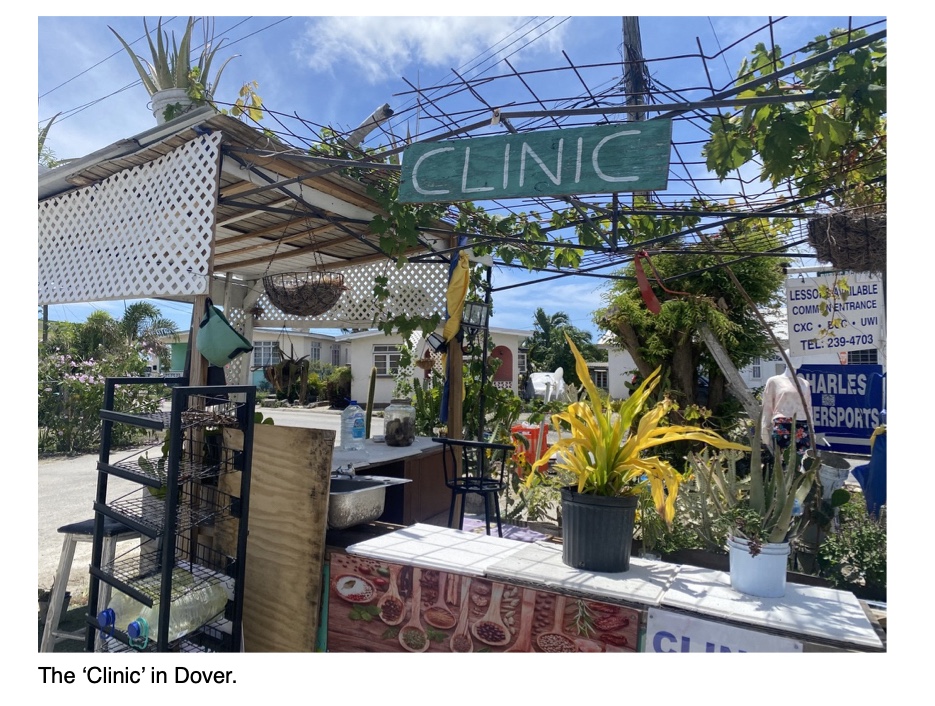
As part of the Youth Exchange, the cohort explored the island’s natural heritage through the Youth & Climate Symposium and excursions to sites including Walker’s Reserve and Graeme Hall Nature Sanctuary. I found the Symposium especially profound. Hearing young people talk about the environmental heritage that mattered to them – from green monkeys to sea turtles, flying fish to white mangroves – and how they had been inspired to do more to protect them. The participants shared about hiking, gardening and volunteering on clean-up projects. Some were also interested in my project and what it meant to understand how something like drinking bush tea could be read as a heritage practice. Despite the common perception I’ve encountered that younger generations aren’t interested in these kinds of old wives’ tales, they demonstrated that herbal medicine still speaks to their interests, especially as it relates Barbadian history, access to healthcare and environmental crisis. These themes kept recurring in conversations and encounters throughout my time there. From the makeshift clinic by my bus stop, offering aloe cuttings and noni to passersby, to a stream of anecdotes about grandmothers’ gardens and remedies; from stories about mosquito bush growing alongside sugarcane, to frequent encounters with the national flower, the Pride of Barbados, and its undeniable petals, stamens and troubled history – the idea of herbal medicine as an enduring heritage continued to resonate.
Barbados’ environment also left a lasting impression. Though a relatively small island at 166 square miles, the beaches, rural areas and conservation sites were lush and vibrant compared to the urban environments I grew up with. One rainy morning I took a bus out to the Andromeda Botanic Gardens in Bathsheba, on the island’s Atlantic coast. Andromeda is full of winding tiled paths that take you through forests, canopies and meadows created by tropical plants from all over the world. In Sharon Cooke’s vision (2024), it is a ‘heritage site for plants, people and wildlife’, reflecting the ways our shared cultural and ecological inheritance is intertwined. Cooke kindly gave me a tour. We lingered in the Ethnobotanic Garden, designed in partnership with Dr Sonia Peter’s Biocultural Education Research Programme (BERP). For Dr Peter, this garden acts as a ‘living library’ (Biocultural Education and Research Programme, n.d.)

Within this section you can find ‘The Ground’, named to reflect the provision grounds, the small pieces of less arable land where the enslaved had to grow the majority of their food. In constant with the beautifully designed acreage of the wider garden, The Ground presented a clear contrast. Every plant, from aloe vera to seaside sage (Croton flavens), gully root (Petiveria alliacea) to mosquito bush (Coleus neochilus) acts as a history book as they each hold a medicinal purpose that can be traced back to enslavement. The legacy of this ecological heritage is reflected in the design of the garden. Seeing these plants growing this way, almost in situ, impressed on me the sense of resilience. Resilience of the plants, competing with cane, grains and livestock for soil, light and water; and resilience of a people who have never stopped fighting to survive.
This trip confirmed my hunch that an ecological heritage like herbal medicine can’t be accessed through books or archives alone. Even interviews aren’t sufficient to really get at the nature of how people learn from and use plants, how plants interact with each other, how practices and memories have been learned and passed down through generations. Herbal medicine exists as a complex heritage ecosystem (Viejo-Rose 2019). In Barbados, this ecosystem has been shaped by legacies of colonialism and enslavement and continues to propagate despite systemic violence. To fully understand how this heritage ecosystem operates and has operated historically, I argue that we must incorporate ‘ecologising’ heritage methodologies. Ecological museum practice can refer to directing museum capacities for communication, education and social engagement relating to contemporary ecological challenges (Brown et al. 2023; Cameron et al. 2014; Newell et al. 2016), but also towards acting as a barricade in the face of social, environmental and epistemic injustice (Soares 2024). After learning from the Shared Island Stories project, I feel more confident in arguing that interdisciplinary and participatory methods are not only useful but necessary not only understand herbal medicine as a heritage ecosystem, but also create more inclusive narratives in a way that prioritises the local Caribbean communities at the centre (Inniss 2019; Fortenberry 2021).

Acknowledgements
I am very grateful to the colleagues and SIS participants I met on this trip for their time and engagement. Many thanks to Professor Karen Brown and the Welland Family Fund, St Catharine’s College, for making my journey possible.
Bibliography
Biocultural Education and Research Programme. n.d. ‘Biocultural Education Research Programme’. Accessed 6 April 2026. Https://www.biocultural-education.org.
Brown, Karen, Alissandra Cummins, and Ana S. González Rueda. 2023. Communities and Museums in the 21st Century: Shared Histories and Climate Action. Taylor & Francis Group.
Brown, Karen, and A. S. Gonzalez Rueda, eds. 2025. Transnational Island Museologies. ICOM.
Cameron, Fiona R., Bob Hodge, and Juan Francisco Salazar. 2014. ‘Conclusion: Climate Change Engagement: A Manifesto for Museums and Science Centers’. In Climate Change and Museum Futures. Routledge.
Cooke, Sharon. 2024. ‘History’. Andromeda Botanic Gardens, March 7. https://andromedabarbados.com/history/.
Fortenberry, Brent R. 2021. ‘Heritage Justice, Conservation, and Tourism in the Greater Caribbean’. In Justice and Tourism. Routledge.
Inniss, Tara A. 2019. ‘Of Roots and Routes. Visioning Barbados’ Cultural 383 Heritage through Trails Development’. In Pre-Colonial and Post-Contact Archaeology in Barbados. Past, Present, and Future Research Directions, edited by Maaike De Waal, Niall Finneran, Matthew C. Reilly, Douglas V. Amstrong, and Kevin Armstrong.
Newell, Jennifer, Libby Robin, and Kirsten Wehner, eds. 2016. Curating the Future: Museums, Communities and Climate Change. Routledge.
Soares, Bruno Brulon. 2024. ‘Decolonising as Rehumanising: Some Community Lessons’. ICOFOM Study Series, nos 52–1 (July): 63–73.
Viejo-Rose, Dacia. 2019. ‘The Ecotones and Edge Effects of Heritage Borders’. In Heritage and Borders, edited by Anna Källén. Kungl. Vitterhets historie och antikvitets akademien.
Bio
Hannah McGurk is a PhD candidate in Archaeology at the University of Cambridge, specialising in Heritage Studies, Caribbean history and the environmental humanities. A scholar-activist of British Jamaican heritage, she has worked with various initiatives led by students, communities and institutions concerned with British legacies of colonialism in education and the heritage sector. For her doctoral research, she is working in collaboration with museums in Cambridge and the Caribbean to ask how herbal medicine can be understood as heritage, and how museum collections speak to that heritage today.